
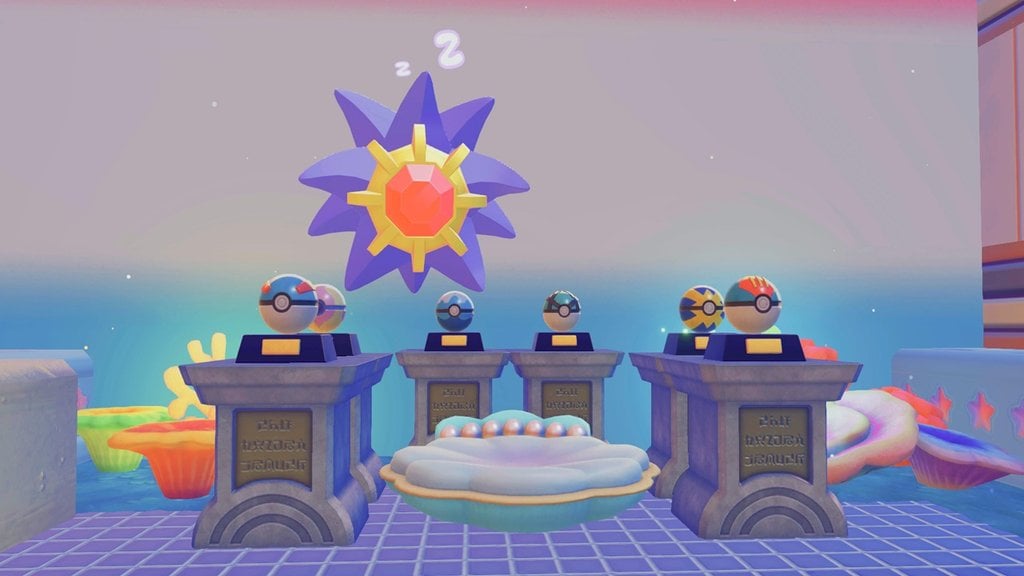
The latest expansion for Pokémon Pokopia, titled “Bubble Depths,” has introduced players to a challenging new collectible hunt that has captured the attention of the gaming community. Among the most sought-after items in this underwater-themed DLC are the decorative Pokéballs, which serve as essential components for constructing the expansion’s most complex habitat. While the game originally intended for players to discover these items by first locating treasure maps scattered throughout the new regions, dedicated fans have already mapped out direct routes to each Pokéball location, allowing collectors to bypass the treasure hunt entirely.
The Bubble Depths expansion represents a significant addition to the Pokopia universe, building upon the game’s core mechanics of habitat creation and Pokémon care. Since its initial release, Pokopia has distinguished itself from other entries in the Pokémon franchise by focusing heavily on environmental design and creature comfort rather than traditional battle mechanics. This approach has resonated strongly with players who enjoy the more relaxed, creative aspects of the Pokémon world, and the new expansion doubles down on this philosophy by introducing elaborate underwater construction projects.
Understanding the Decorative Pokéball System
The decorative Pokéballs in Bubble Depths serve a fundamentally different purpose than their traditional counterparts. Rather than capturing Pokémon, these ornamental spheres function as building materials and aesthetic enhancements for player-created habitats. Each decorative Pokéball features unique designs inspired by various Water-type and aquatic Pokémon, with some displaying intricate patterns reminiscent of coral formations, bioluminescent creatures, and deep-sea phenomena. Collecting all of them unlocks the ability to construct the Abyssal Sanctuary, the expansion’s ultimate habitat that can house rare Pokémon species unavailable elsewhere in the game.
The treasure map system was designed to encourage exploration of the expansion’s new underwater zones, each featuring distinct biomes ranging from tropical shallows to mysterious deep-sea trenches. However, many players have found the maps themselves difficult to obtain, as they require completing specific side quests or achieving certain milestones that aren’t clearly communicated in-game. This has led the community to develop comprehensive guides that allow players to locate the Pokéballs directly without first acquiring the corresponding maps.
Complete Location Guide for All Decorative Pokéballs
The first cluster of decorative Pokéballs can be found in the Coral Gardens zone, situated in the northeastern sector of the expansion’s map. Players should navigate to the large rock formation shaped like a sleeping Wailord, where three Pokéballs are hidden within small caves along its base. The second major collection point is located in the Kelp Forest, where players must swim through the dense vegetation to discover Pokéballs attached to various plant structures. These items glow faintly, making them easier to spot in the murky waters if players know where to look.
The Twilight Depths zone contains some of the most challenging Pokéballs to locate, as the reduced visibility and labyrinthine cave systems can easily disorient players. Experienced collectors recommend bringing Pokémon with illumination abilities to light the way. The final set of decorative Pokéballs awaits in the Volcanic Vents area, where players must carefully navigate around dangerous thermal currents while searching near sulfur deposits and inactive geysers. Successfully gathering all Pokéballs from these four zones completes the collection necessary for the Abyssal Sanctuary project.
Tips for Efficient Collection
Veterans of the Pokopia series recommend tackling this collection challenge with proper preparation. Ensuring your character has maximum oxygen capacity upgrades will prevent frustrating interruptions during extended underwater searches. Additionally, equipping Pokémon companions with the Keen Eye ability will cause nearby collectibles to sparkle more prominently, significantly reducing search times. The community has also noted that visiting these locations during the in-game night cycle can make bioluminescent Pokéballs easier to identify against the darker background, though this strategy works best in the deeper zones where natural light is already limited.
Expert Opinion: The Bubble Depths expansion demonstrates Pokopia’s continued commitment to rewarding exploration over grinding, though the obscured treasure map requirements suggest room for improvement in player communication. This collectible system will likely see refinements in future updates, potentially adding map hints to the in-game journal. Players should complete their collections now while community guides remain accurate, as upcoming patches may alter item placements.