
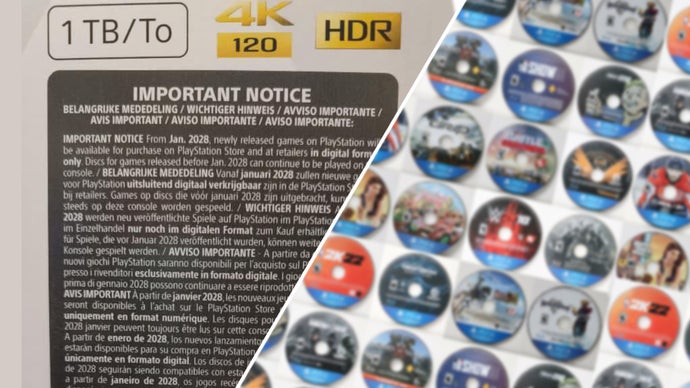
Sony Interactive Entertainment appears to be taking proactive steps to inform consumers about its controversial decision to phase out physical game media. Reports have emerged that new PlayStation 5 consoles equipped with disc drives are now shipping with notices warning buyers that the company will cease supporting physical disc-based games at the beginning of 2028. This move signals that Sony is firmly committed to its digital-first strategy, despite significant backlash from gaming communities and consumer advocacy groups who have voiced concerns about game preservation and ownership rights.
The warning labels represent an unusual step in consumer electronics marketing, as companies rarely advertise the planned obsolescence of their products’ features at the point of sale. However, the decision reflects Sony’s apparent desire to manage customer expectations and avoid potential legal complications down the line. By informing buyers upfront that their disc drive functionality will have a limited lifespan in terms of new game support, Sony is essentially providing fair warning to consumers who might otherwise assume they could continue purchasing physical games indefinitely.
The Shift Away from Physical Media
Sony’s decision to end physical disc production is part of a broader industry trend toward digital distribution that has been accelerating over the past decade. The gaming industry has witnessed a dramatic shift in consumer purchasing habits, with digital game sales now accounting for approximately 80% of all game purchases on modern platforms. This transition has been driven by the convenience of instant downloads, the elimination of inventory constraints, and the higher profit margins that digital sales offer to both publishers and platform holders who no longer need to manufacture, ship, and share revenue with physical retailers.
The announcement of the 2028 cutoff date came earlier this year and immediately sparked heated debate within the gaming community. Critics argue that ending physical media production threatens game preservation, as digital storefronts can be shut down, licenses can be revoked, and games can be delisted without warning. The closure of various digital storefronts over the years, including Nintendo’s 3DS and Wii U eShops, has demonstrated that digital purchases are not guaranteed to remain accessible forever. Physical media advocates contend that disc-based games represent true ownership, allowing players to resell, lend, or collect games without dependence on online services.
Consumer Rights and Industry Response
Consumer advocacy groups have been increasingly vocal about digital ownership rights in gaming. Organizations in Europe and North America have called for stronger protections ensuring that purchased digital content remains accessible to consumers. Some jurisdictions have begun exploring legislation that would require companies to maintain access to digital purchases or provide refunds when services are discontinued. Sony’s warning labels could be interpreted as an attempt to preempt such regulatory concerns by ensuring consumers are fully informed before making purchasing decisions.
The gaming industry’s response to Sony’s announcement has been mixed. Microsoft, Sony’s primary competitor in the console space, has maintained its commitment to physical media for the time being, though the company has increasingly emphasized its Game Pass subscription service. Nintendo continues to produce physical games for its Switch platform and has not announced any plans to discontinue disc or cartridge production. Third-party publishers have largely remained neutral publicly, though many have already shifted significant resources toward digital distribution infrastructure.
What This Means for PlayStation Owners
For current and prospective PlayStation 5 owners, the practical implications of this transition are significant. Those who purchase disc-based consoles will still be able to play their existing physical game libraries indefinitely, as the hardware itself will continue to function. However, after 2028, newly released games will only be available through digital download from the PlayStation Store. This means collectors, those with limited internet access, and consumers in regions with unreliable broadband infrastructure may face challenges accessing new content.
The inclusion of warning labels on console boxes suggests Sony is preparing for a future where the Digital Edition of the PlayStation 5, which lacks a disc drive entirely, becomes the standard configuration. Industry analysts speculate that future PlayStation hardware may not include disc drives at all, completing the transition to an all-digital ecosystem. While this approach offers benefits in terms of reduced manufacturing costs and streamlined distribution, it fundamentally changes the relationship between consumers and their game libraries, shifting from ownership to what many describe as long-term licensing arrangements.
Expert Opinion: Sony’s decision to add warning labels demonstrates a calculated approach to managing the transition away from physical media while minimizing legal exposure. The 2028 deadline gives the company approximately three years to complete this shift, likely coinciding with the next PlayStation hardware generation. This move will almost certainly accelerate similar decisions from competitors and could mark the beginning of the end for physical game media across the entire console industry within the next decade.