
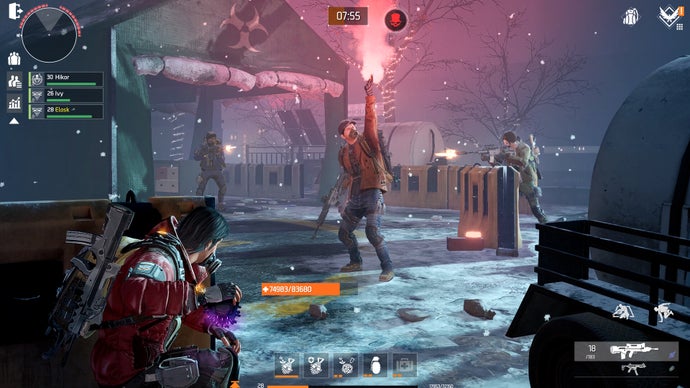
The Division Resurgence, Ubisoft’s free-to-play mobile spinoff of the popular tactical shooter franchise, has made an unexpected leap to Steam, leaving many PC players scratching their heads about the decision. Originally developed as a mobile-exclusive experience, the game’s sudden appearance on Valve’s platform has generated a wave of confusion and mild frustration among the gaming community, who question why Ubisoft would bring a scaled-down mobile title to a platform that already hosts the franchise’s full-fledged entries.
In the crowded landscape of announced-then-cancelled spinoffs based on Ubisoft’s biggest franchises, The Division Resurgence stands out as one of the few projects that actually managed to cross the finish line. The game was first announced in 2022 as an ambitious attempt to bring the tactical shooter experience to smartphones and tablets, featuring a standalone storyline set in the same post-pandemic New York City that defined the original games. After several years of development and multiple beta testing phases across various regions, the title finally achieved a full release on mobile platforms.
A Controversial Platform Expansion
The decision to port a mobile game to Steam has raised eyebrows throughout the gaming community. Steam users have expressed their bewilderment in reviews and forum discussions, with many questioning the logic behind bringing a touch-optimized experience to a platform dominated by high-end gaming PCs. The Division franchise already has a strong presence on Steam with both The Division and The Division 2 available, making the arrival of a mobile port seem redundant at best and cynical at worst. Players have pointed out that the game’s simplified mechanics, designed for touchscreen interfaces, feel out of place when played with a mouse and keyboard setup.
The frustration extends beyond mere confusion about platform choice. Many players have noted that Resurgence features the typical free-to-play mobile monetization structures, including energy systems, gacha-style mechanics, and premium currencies. These elements, while common and accepted in the mobile gaming sphere, tend to receive harsh criticism when presented to PC audiences who have different expectations for their gaming experiences. The contrast between Resurgence’s mobile-first design philosophy and the premium experiences typically found on Steam has created a disconnect that reviewers have been quick to highlight.
The Division Franchise: A Complicated History
The Division franchise has had a turbulent journey since its explosive debut in 2016. The original game launched to massive commercial success, with Ubisoft reporting over $330 million in first-week sales, making it the company’s biggest new franchise launch at the time. However, the game struggled with endgame content and technical issues that drove away a significant portion of its player base. The Division 2, released in 2019, addressed many of these concerns but faced its own challenges in maintaining player engagement over time. Ubisoft has attempted various strategies to keep the franchise relevant, including the ill-fated Division Heartland project, a free-to-play survival game that was ultimately cancelled after years of development.
The mobile gaming market represents a logical expansion target for major publishers like Ubisoft, given its enormous global reach and revenue potential. However, the strategy of porting mobile games to PC platforms remains controversial. While some titles like Genshin Impact have successfully bridged the gap between mobile and PC audiences, many others have struggled to justify their existence on platforms where players expect more sophisticated experiences. The Division Resurgence’s arrival on Steam appears to fall into the latter category, with its mobile-centric design failing to resonate with the PC gaming community.
What This Means for Ubisoft’s Strategy
This move reflects Ubisoft’s broader strategy of maximizing the reach of its existing properties across all available platforms. The company has faced significant financial pressures in recent years, leading to studio closures and project cancellations. Bringing Resurgence to Steam requires relatively minimal investment compared to developing a new title from scratch, potentially generating additional revenue from a product that already exists. However, the negative reception suggests that this approach may carry reputational risks, particularly when it comes to maintaining the perceived quality and prestige of established franchises like The Division.
Expert Opinion: The decision to port The Division Resurgence to Steam represents a calculated but risky gamble by Ubisoft that prioritizes short-term revenue opportunities over long-term brand health. While the mobile-to-PC pipeline can work for certain genres, tactical shooters with established PC pedigrees face heightened scrutiny when presenting mobile-optimized experiences. This move may generate modest returns but could further erode player trust in the franchise ahead of any potential Division 3 announcement.